How to Help an Anxious Child — Books That Actually Work
Anxiety in children looks different from anxiety in adults. It shows up as clinginess at the school door, a stomach that hurts before soccer practice, an hour of bedtime delay because something might go wrong. It looks like a child who asks "but what if?" over and over — not to be difficult, but because the worry won't stop on its own.
As an LCSW-C — a Licensed Clinical Social Worker with thousands of hours working with anxious children and their families — I've seen what actually helps. And one of the most consistent, underestimated tools is the right book at the right moment.
Not every children's book about worry helps. Many skip straight to reassurance without first validating the feeling — which clinically, is backwards. Children need to feel heard before they can hear anything else. The books on this list do that first. Then they offer something actionable.
About this guide: Emi K holds an LCSW-C designation — one of the most rigorous clinical credentials in mental health, requiring 3,000+ supervised clinical hours and a national licensing exam. These recommendations come from both clinical experience and personal authorship of therapeutic children's books.
This guide is organized by anxiety type, because anxious children are not all anxious about the same thing. Find your child's category — then start there.
Separation Anxiety: Books That Help Children Separate with Confidence
Separation anxiety is one of the most common forms of childhood anxiety — and one of the most misunderstood. It is not about being spoiled or manipulative. It is a real fear response, rooted in attachment neuroscience. The child's nervous system genuinely perceives separation as dangerous.
The books in this section work by doing two things: first, they normalize the fear (so the child doesn't feel broken or alone). Second, they demonstrate that separation ends — that the caregiver comes back, that the child survived, and that they were okay.
Peep Peep, Here I Go!
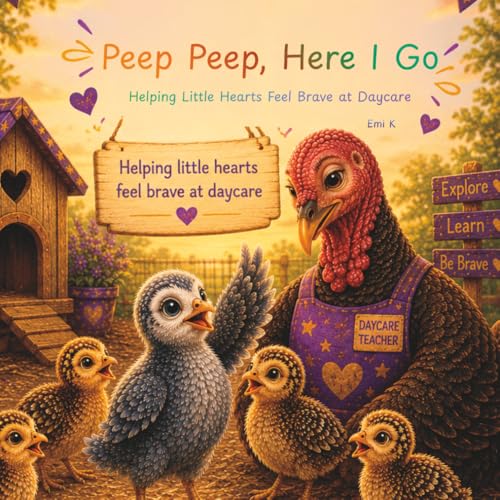
Age range: 2–6 | Best for: Daycare drop-off, preschool starts, first separations
Series: Little Barnyard Blessings
This book follows a tiny turkey chick through the very first day of daycare — the mix of butterflies and excitement, the hard moment at drop-off, and the slow discovery that new things can become familiar ones. It is written in soothing rhymes with soft watercolor illustrations, which matters: the nervous system of an anxious child responds to rhythm and warmth before it responds to words.
What makes this clinically effective: the chick never magically stops being scared. Instead, the book shows courage as a series of small, doable steps — not a feeling you have, but a choice you keep making. That is exactly the language of exposure therapy for young children.
Read this in the week before school starts, then again on the first morning. The repetition itself is regulating.
Buy on TaleNest — $9.00 View on Amazon
Brave Hearts, New Friends
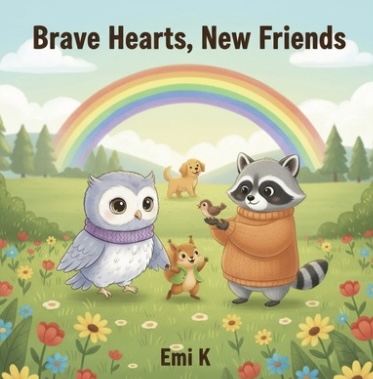
Age range: 3–8 | Best for: New school year, first friendships, separation mixed with social anxiety
Series: Little Hearts, Big Skills
The title says it all: being brave doesn't mean the fear goes away. It means going anyway. Brave Hearts, New Friends is written for the child who is scared of both the separation and what comes after — the unfamiliar room, the unfamiliar faces. It addresses both at once, which is why it's so useful for back-to-school anxiety in particular.
Pair this with a brief before-school ritual — a special goodbye, a phrase you say together, a small object the child keeps — to anchor the brave-hearts concept in something physical and reliable.
Buy on TaleNest — $9.00 View on Amazon
Social Anxiety & New Situations: Books That Help Children Face the Unknown
Socially anxious children are not shy — or at least, shyness doesn't capture what's happening. Their nervous system flags novelty as threat. New people, new places, new expectations all register as danger, even when there is no actual danger. This is not a character flaw. It is a wiring pattern that responds to gradual, supported exposure — and to stories that model that process.
The books below show children facing new situations step by step, with fear intact, and coming out the other side. That narrative arc — fear → small brave action → safe outcome — is the basic structure of every effective anxiety intervention for young children.
When the World Feels New: Two Brave Dogs Find a Friend

Age range: 3–7 | Best for: Social anxiety, making friends, new environments
Series: When the World Feels…
Two dogs, one new world, and the question that sits at the center of every socially anxious child's experience: What if nobody wants to be my friend?
This book handles that fear directly — without minimizing it, and without delivering the hollow reassurance that "of course everyone will love you." Instead, it shows the process: noticing the fear, taking a small step toward connection anyway, and discovering that the other dog was also nervous. Social anxiety lives in isolation. This book quietly dismantles that isolation by showing that other children feel the same way.
For children entering a new school, moving to a new neighborhood, or joining a new activity, this is the book to read first.
Buy on TaleNest — $9.00 View on Amazon
Mama Flora & The Courage Within
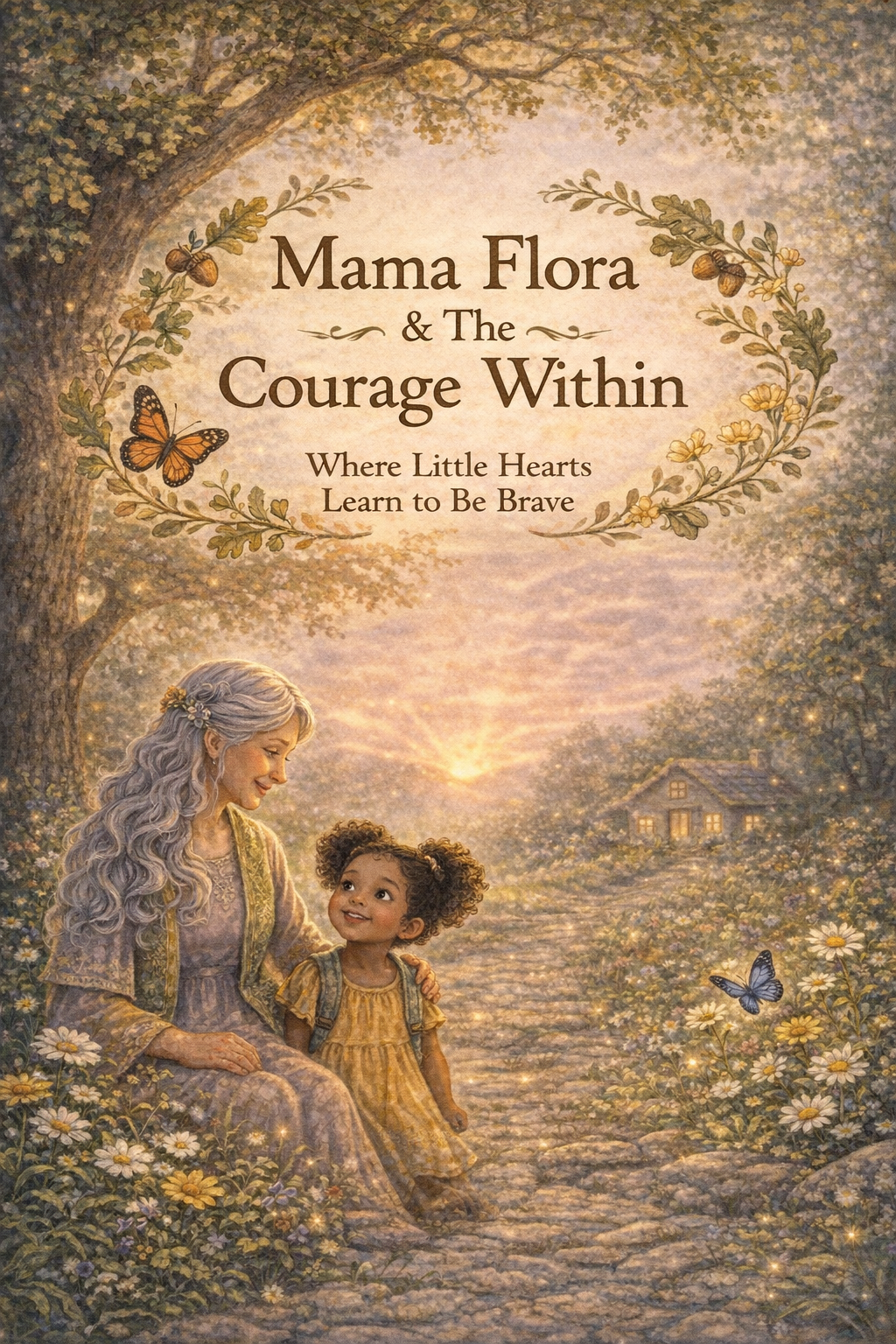
Age range: 3–8 | Best for: Children who need courage to try new things, sensitive or anxious temperaments
Series: Mama Flora
Mama Flora is one of the most clinically useful characters in children's literature for anxious kids — because she doesn't fix the fear. She acknowledges it, names it, and then helps the child locate their own courage rather than borrowing hers.
This is a crucial distinction. Many well-meaning parents of anxious children inadvertently reinforce avoidance by over-reassuring ("There's nothing to be scared of!") or rescuing too quickly. Mama Flora & The Courage Within models the alternative: a warm caregiver who helps a child access their own inner resources. That's the clinical goal. This book makes it visible.
Buy on TaleNest — $9.00 View on Amazon
General Worry & Fear: Books for Children Who Can't Stop Thinking "What If?"
Some children's anxiety isn't tied to a specific trigger — it's a generalized low hum of worry that follows them everywhere. The "what if" loop. The stomach that hurts before anything happens. The mind that runs worst-case scenarios automatically.
These children often can't articulate what they're scared of, because they're scared of everything. What helps: naming the experience, normalizing it (worry is something all brains do, not a sign of weakness), and giving the child a felt sense that they are not alone in feeling this way.
When the World Feels Scary
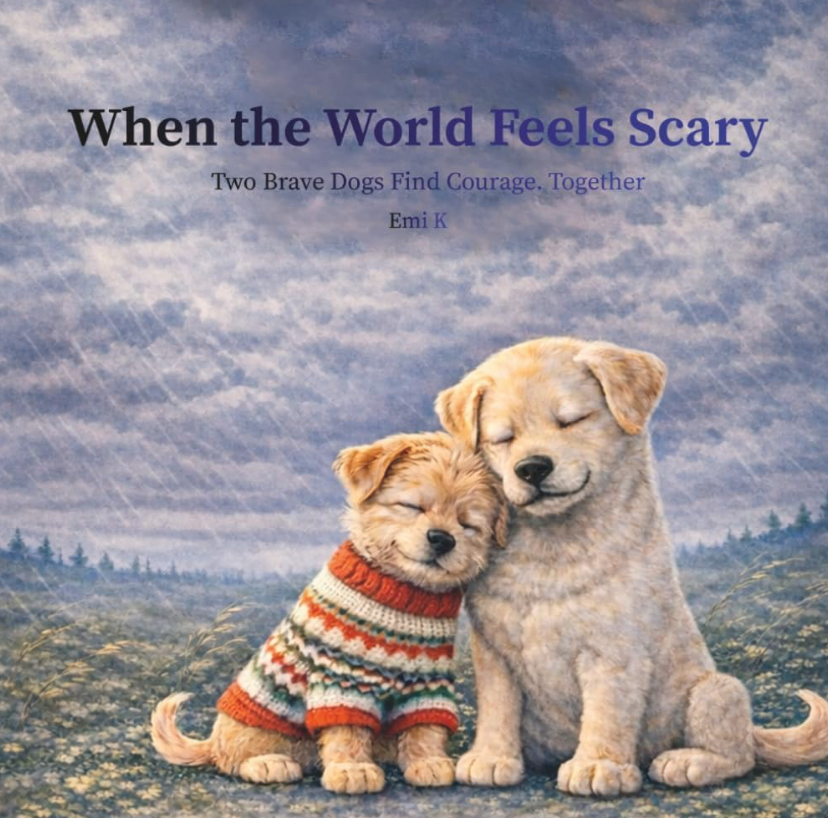
Age range: 2–6 | Best for: General worry, nighttime fears, anxious temperament
Series: When the World Feels…
This is the book I reach for first with generalized anxiety in young children. The title does the work that most parents struggle to do: it names the feeling without explaining it, questioning it, or rushing past it. The world feels scary. Full stop. That validation, before any coping strategy is offered, is what makes anxious children willing to keep reading.
The two-dog format introduces something else that's clinically powerful: peer modeling. Anxious children often feel uniquely broken — like worry is their private problem. Seeing two characters experience it together (and navigate it together) normalizes the feeling and introduces the idea of co-regulation: that being brave with someone else is easier than being brave alone.
For the full anxiety-and-courage arc across age levels, pair this with When the World Feels Big and When the World Feels Quiet.
Buy on TaleNest — $9.00 View on Amazon
When the World Feels Big

Age range: 3–7 | Best for: Overwhelm, children who feel like the world is "too much," anxious nervous systems
Series: When the World Feels…
Some anxious children don't experience a specific fear so much as a pervasive sense that the world is just… too much. Too loud. Too fast. Too uncertain. When the World Feels Big speaks directly to that experience, validating overwhelm without dismissing it or rushing the child through it.
Developmentally, this book lands well with children who are highly sensitive — those who process stimulation more deeply than their peers. For these children, the message that "feeling overwhelmed doesn't mean you can't handle it" is not just comforting. It is reorienting. And that reorientation, over time and through repetition, is what builds resilience.
Buy on TaleNest — $9.00 View on Amazon
Transitions & Change: Books for Children Who Struggle When Things Change
For many anxious children, the trigger isn't a specific fear — it's uncertainty. Change, even positive change, registers as dangerous because the outcome is unknown. New school. New home. New sibling. Summer ending. The worry isn't "this will be bad." It's "I don't know what this will be."
Books in this section address the anxiety of transition directly — helping children build internal resources to carry with them through the change, rather than requiring everything to be familiar and controlled.
The Bridge to Grandma's House
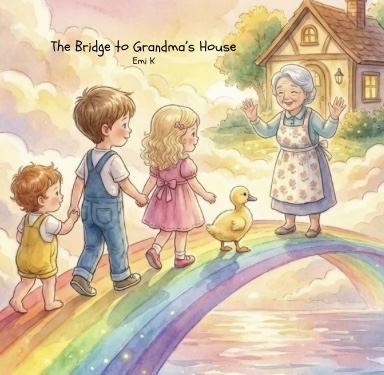
Age range: 3–8 | Best for: Family transitions, summer visits, changes in routine, building emotional resilience
Series: Little Hearts, Big Skills
The bridge in this story is literal — and metaphorical. It's the passage between the familiar and the new, between one kind of safety and another. For anxious children who struggle with transitions, the book offers something genuinely useful: the idea that love and safety travel with you. They are not stored in a place. They are stored in relationship.
This concept — what therapists call "transitional object thinking" — is one of the most important internal resources an anxious child can develop. The Bridge to Grandma's House makes it concrete and accessible without ever becoming clinical or preachy.
Buy on TaleNest — $9.00 View on Amazon
A New Home, A Love That's True
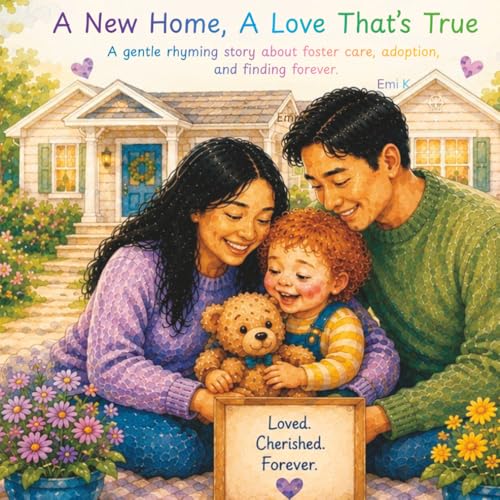
Age range: 3–8 | Best for: Foster care, adoption, major family changes, children who have experienced loss or instability
Series: The Many Ways Families Love
For children facing the most significant of transitions — a new home, a new family, the uncertainty of not knowing what comes next — this book meets them where they are. It doesn't rush to resolution or insist that the new home will definitely be wonderful. It does something harder and more useful: it holds the complexity of hope alongside fear, and anchors the child in love that doesn't require the situation to be perfect in order to be real.
School counselors and foster care social workers frequently use this book with children in placement. Its value for anxious children more broadly is in its honesty — it doesn't pretend that change is easy. It insists that you can be held through it anyway.
Buy on TaleNest — $9.00 View on Amazon
How to Read These Books with an Anxious Child
Books don't do the work alone. They open doors. Here's how to walk through them with an anxious child, from clinical practice:
Validate before you redirect.
When a child says they're scared, the instinct is to reassure. Resist it — for one more beat. Say "I hear you. That feels really scary" before anything else. The book models this; your reading aloud should too. Validation before coping is the clinical sequence that actually works.
Don't read for solutions.
The first read of any book should be purely for connection — enjoy the story, feel the feelings, don't try to extract lessons. On the second or third read, you can begin to pause and ask: "Have you ever felt like the character? What does that feel like in your body?"
Name the body sensation.
Anxiety lives in the body — tight chest, stomach butterflies, racing heart. When a character in a book experiences fear, ask your child: "Where do you think the dog feels the scared? In their tummy? Their chest?" Connecting emotion to body sensation is a foundational skill for self-regulation.
Repeat deliberately.
Anxious children who return to the same book again and again are doing therapeutic work. The repetition is regulating — the familiar rhythm, the known outcome, the safe story. Let them revisit. Don't push for novelty if they keep choosing the same book.
Use the book as a bridge to conversation.
The best moment for a real conversation with an anxious child is often not a direct one. "I was thinking about that book we read — the dog who felt scared about the new thing. Do you ever feel like that?" The book gives both of you a character to talk about instead of requiring the child to be vulnerable directly.
Get the Free Feelings Talk Starter Guide
Reading together is the first step. The Feelings Talk Starter Guide gives you 10 conversation prompts — organized by emotion — that you can use during or after shared reading to go deeper.
Created by Emi K, LCSW-C. Includes prompts specifically for anxiety, worry, fear, and transitions — the emotions covered in this guide.
Download the Free Feelings Talk Starter Guide →
Free. No spam. Sent to your inbox immediately.
Browse the Full Collection
The books in this guide are drawn from Emi K's full catalog of LCSW-C-authored therapeutic children's books. For a complete view: