How to Help an Anxious Child — Books That Actually Work
Childhood anxiety is one of the most common concerns parents bring to pediatricians and therapists. It shows up in different ways — the child who clings at drop-off, the one who won't sleep alone, the child who melts down before a birthday party, or the one who quietly worries but never says why. All of these are anxiety. And all of them can be helped.
One of the most evidence-supported, low-barrier tools for reducing childhood anxiety is shared reading. When a child sees their own fear held in a story — named, validated, and gently resolved — something shifts. They learn that others have felt what they feel. They learn that the feeling doesn't last forever. And they absorb, through narrative, the coping strategies that would be much harder to teach through explanation alone.
This guide was written by Emi K, LCSW-C — a Licensed Clinical Social Worker who has spent years working with anxious children and their families in clinical settings. Every book recommended here has been evaluated through a clinical lens: Does it validate the anxiety before offering strategies? Does it end with the child feeling capable, not just reassured? Is the emotional sequencing developmentally appropriate?
How to use this guide: Skim for the anxiety type that matches your child right now. Each section covers a specific kind of childhood anxiety and the books that address it most effectively.
What Actually Helps Anxious Children (and What Doesn't)
Before the book recommendations, a quick clinical note on what works — because it changes how you read these books with your child.
What doesn't work: Reassurance. At least, not on its own. Telling an anxious child "you'll be fine" or "there's nothing to worry about" provides temporary relief but trains the anxiety to return stronger. The child's nervous system learns: "When I feel scared, I get reassurance, and the feeling goes away — but I never learn I can handle it myself."
What does work: Validation + gentle exposure + evidence-building. The child needs to know their feeling is real and okay (validation), take small brave steps toward the feared thing (exposure), and accumulate evidence that they can survive it (mastery). Books do all three — they validate the feeling through the character's experience, model brave steps in a low-stakes narrative form, and show the character coming through to the other side.
When you read these books with your child, resist the urge to skip to the resolution. Sit with the character's fear. Ask your child: "Does that feel familiar?" That is the therapeutic moment.
Separation Anxiety: Books for Kids Who Struggle at Drop-Off
Separation anxiety is one of the most common forms of childhood anxiety, peaking between ages 1–3 and again around school entry. A child with separation anxiety isn't "clingy" — their nervous system has learned to signal danger when their primary caregiver is unavailable. These books address that specific fear directly.
Peep Peep, Here I Go!
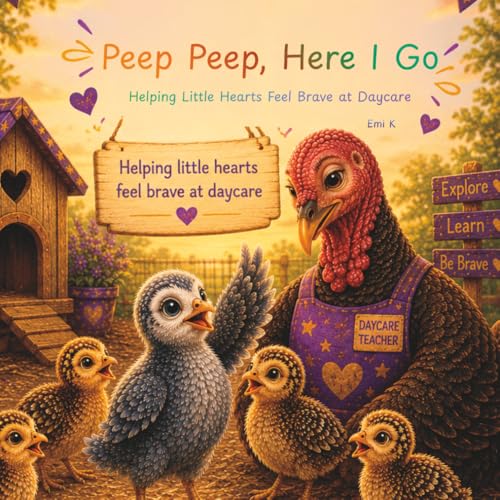
Age range: 2–6
Best for: Starting daycare, preschool, or any first drop-off situation
Anxiety type: Separation anxiety, transitions
A tiny turkey chick's first day of daycare is the premise — but the emotional truth is universal. Peep Peep, Here I Go! follows a child's exact internal experience of separation: the mix of excitement and dread, the moment of watching a caregiver walk away, the surprising discovery that the new place is okay. What makes this book clinically effective is what it doesn't do: it doesn't rush past the hard feeling. It names the worry, holds it, and then shows (rather than tells) the child moving through it. Read this together in the week before a new drop-off situation begins. Read it again on the first morning. The repetition is not indulgence — it's preparation.
When the World Feels New: Two Brave Dogs Find Their Way
Age range: 2–6
Best for: New school, new home, new sibling — any major change
Anxiety type: Transition anxiety, separation from familiar
When everything feels new and unfamiliar, anxiety surges — even when the new thing is objectively good. When the World Feels New follows two dogs navigating an unfamiliar world and discovering that new doesn't mean bad, and that the feeling of fear in a new place is temporary and survivable. This book is particularly effective for children who experience anxiety specifically around change rather than separation from a caregiver — a subtly different presentation that many books miss. Part of the When the World Feels… series.
Social Anxiety: Books for Kids Who Worry About Other People
Social anxiety — fear of judgment, embarrassment, or rejection by peers — is distinct from shyness. A shy child may warm up; a socially anxious child is in genuine distress around unfamiliar social situations. These books address it without labeling it, which is exactly right developmentally: children don't need a diagnosis, they need to see their experience reflected and normalized.
Brave Hearts, New Friends
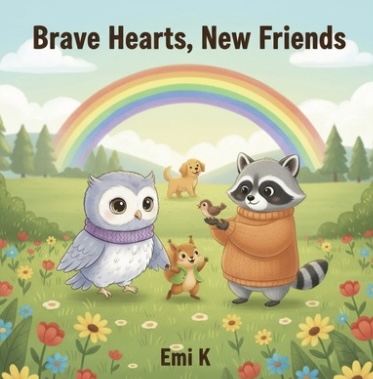
Age range: 3–8
Best for: Before summer camp, a new school year, neighborhood move
Anxiety type: Social anxiety, fear of rejection, new social situations
Making new friends is the single most anxiety-provoking social task for many children — and it's one that can't be avoided. Brave Hearts, New Friends does something clinically precise: it redefines courage not as the absence of fear, but as the willingness to take one small step forward even when your heart is pounding. This is the exposure model at its simplest. Children who internalize this definition of bravery are better equipped for every social challenge ahead — not just the first day of camp, but the rest of childhood. For a complete back-to-school transition reading plan, see the Back-to-School Reading Guide.
When the World Feels Scary
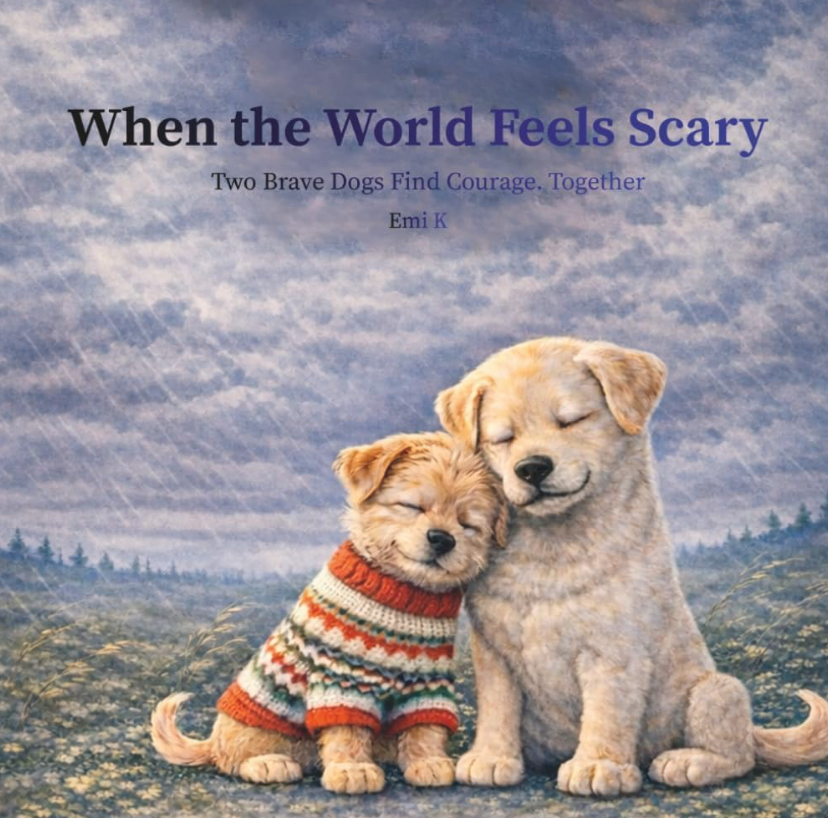
Age range: 2–6
Best for: Fear-prone children, clingy children, nighttime worries
Anxiety type: Generalized fear, anxiety in the body, peer co-regulation
Fear and anxiety aren't the same thing, but in early childhood they feel identical — and look identical to parents. When the World Feels Scary doesn't try to distinguish them. It meets the child where they are: scared, in their body, in the middle of a world that feels bigger and less safe than they'd like. The two-dog format introduces something valuable beyond the fear itself: the concept of co-regulation. Having a trusted friend present changes what's possible. Children who are read this book frequently start to understand that their own nervous system can be calmed by another person's presence — a foundational insight for both anxiety management and secure attachment.
Worry Books: For Kids Whose Minds Don't Turn Off
Some children worry about everything — or at least it feels that way. They catastrophize. They ask "what if" questions in loops. They struggle to sleep because their brain keeps generating worst-case scenarios. This is not a character flaw or bad parenting. It is childhood anxiety in its cognitive form. These books give that experience a name, a face, and — crucially — a path through.
When the World Feels Big
Age range: 3–8
Best for: Children who over-worry, perfectionist children, anxious-at-bedtime children
Anxiety type: Generalized anxiety, cognitive worry, overwhelm
The world is big — and for a child whose brain runs on what-ifs, it can feel impossible to navigate. When the World Feels Big validates the overwhelm before it does anything else. The emotional sequencing here is critical: the book holds the child's experience of bigness and uncertainty without immediately resolving it. Only after that holding does the narrative gently show that big feelings have edges — that the world-feeling-big is not permanent, not the child's fault, and not the end of the story. For children prone to anxiety spirals, this structure is a template they can internalize over multiple readings.
When the World Feels Quiet
Age range: 2–6
Best for: Bedtime anxiety, quiet-but-worried children, sensitive children
Anxiety type: Quieter anxiety presentations, bedtime fears, hypervigilance
Not all anxiety is loud. Some children are quiet in their worry — hypervigilant, scanning for danger, unable to settle. When the World Feels Quiet is written for this presentation. It is calming in its pacing, warm in its tone, and clinically attentive to the child whose anxiety lives in stillness rather than outbursts. The book's quiet rhythm itself is part of the therapeutic mechanism — it co-regulates through pace. Ideal for a bedtime reading routine with anxious children who have trouble settling.
Transition Anxiety: Books for Kids Who Fear Change
Transitions — even positive ones — are anxiety triggers for many children. Starting a new school, a parent returning to work, a family move, a new sibling, even the end of summer. What these situations share is the loss of the predictable and the introduction of the unknown. Children with transition anxiety aren't resisting the new thing. They're managing the uncertainty of not knowing what comes next.
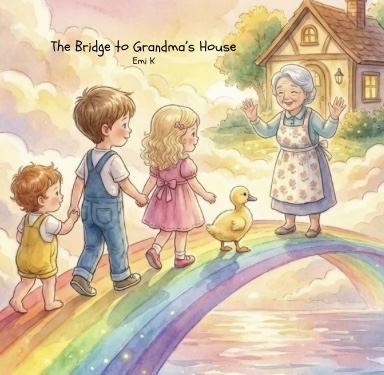
The Bridge to Grandma's House
Age range: 3–8
Best for: Children facing any significant change — even positive ones
Anxiety type: Transition anxiety, anticipatory anxiety, change resistance
The most clinically sophisticated insight in The Bridge to Grandma's House is one most children's books miss: transitions are hard even when you're going somewhere wonderful. This book doesn't frame the bridge as something to endure — it frames it as part of the journey, a passage through the in-between toward something warm and safe. Children who understand that uncertainty is a passage (not a trap) are far better equipped to tolerate transitions without shutting down or melting down. For children with travel anxiety, school-year transition anxiety, or resistance to good changes, this is an essential read.
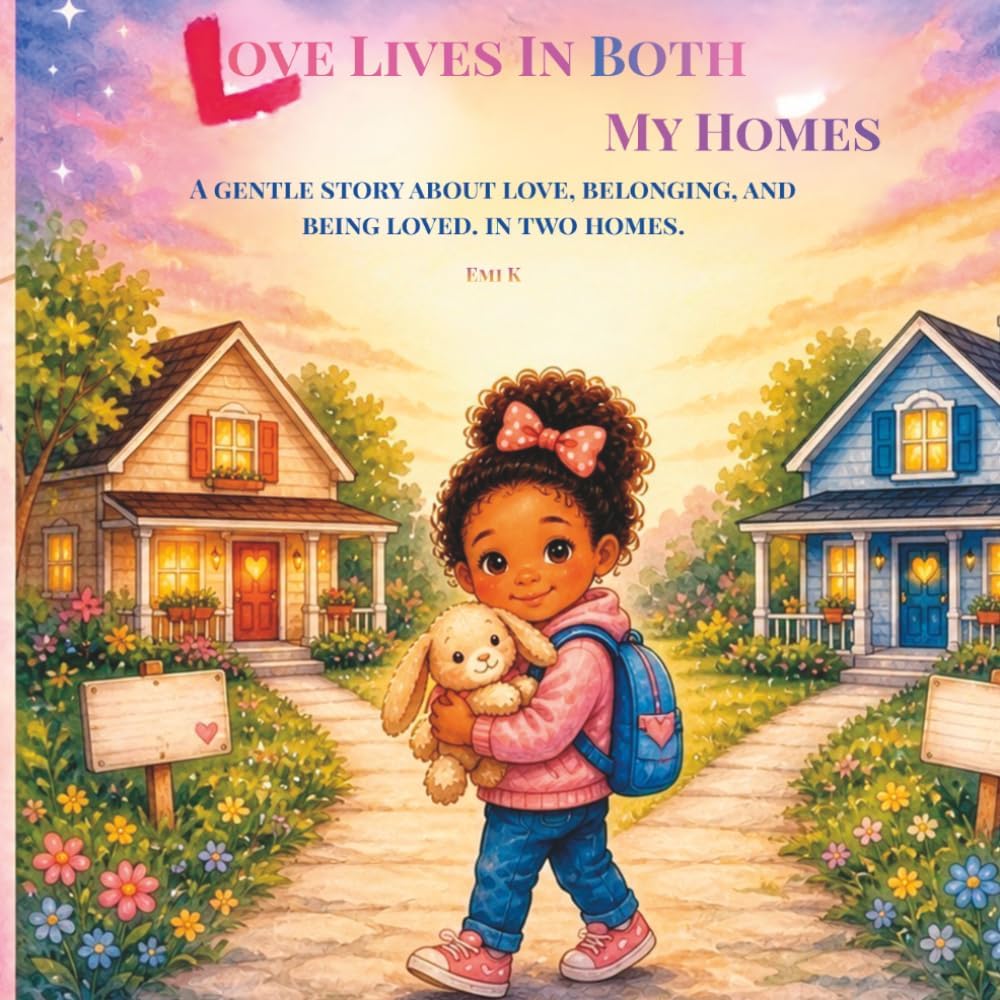
Love Lives in Both My Homes
Age range: 2–6
Best for: Children in two-home families, post-separation transitions
Anxiety type: Separation-related anxiety, family-change anxiety, attachment worries
For children whose transitions happen regularly — moving between two homes after a family separation — anxiety isn't about a single event. It's woven into the rhythm of their week. Love Lives in Both My Homes gives these children a felt sense that the love they depend on travels with them. This is attachment language made narrative. School counselors across the country use this book as a first-read anchor when supporting children through family reorganization. Pair with Sometimes I Miss You for a complete emotional toolkit for children in co-parenting arrangements.
How to Read Anxiety Books with an Anxious Child
A few notes from clinical practice on getting the most out of these books:
- Don't read them during a crisis moment. When a child is already dysregulated (crying, clinging, refusing to go somewhere), it's not reading time. Read when things are calm — before the situation, at bedtime, during a quiet afternoon. Preparation, not intervention.
- Name the connection explicitly. "This little turkey chick feels just like you do before school." Children need the bridge drawn for them. Don't assume they'll make it on their own.
- Ask what the character is feeling, not what your child is feeling. It's emotionally easier to answer about the character. "How do you think Peep feels right now?" is less threatening than "How do you feel?" The child answers about the character — and processes their own experience at one safe remove.
- Let them ask for it again. A child who wants to read the same anxiety book five nights in a row is doing therapeutic work. The repetition is the point.
- Pair it with the free guide. The Feelings Talk Starter Guide has conversation prompts keyed specifically to anxiety, fear, and transitions. It extends the reading into real conversation.
About This Guide
This reading list was written by Emi K, LCSW-C — a Licensed Clinical Social Worker (LCSW-C) and author of 26 therapeutic children's picture books. The LCSW-C designation requires 3,000+ supervised clinical hours and a national licensing exam; it is one of the most rigorous clinical credentials in mental health. Every book recommended here is from her own catalog, written with the specific clinical intention of supporting anxious children through picture-book narrative.
For more on the clinical training behind these books, read: Why a Licensed Therapist Writes Children's Books — And Why It Matters for Your Child.
For librarians and school counselors building therapeutic collections: the For Librarians page and For Teachers and Counselors page both have collection development resources organized by SEL theme, including a dedicated anxiety and transitions section.
Browse by your child's age: Books by Age.
Download the Free Feelings Talk Starter Guide →
10 conversation prompts for parents and educators, curated by Emi K, LCSW-C. Free. No spam.