5 Children's Books That Help Kids Understand Their Emotions
Every parent knows the moment: a tantrum in the supermarket, a tearful meltdown at bedtime, a sulk that seems to come from nowhere. Young children experience enormous feelings long before they have the language to describe them. The gap between what they feel and what they can say is one of the most challenging parts of early childhood — for children and parents alike.
Books can help bridge that gap. When a child sees a character wrestling with the same big, confusing emotion they're experiencing right now, something clicks. They feel less alone. They find words. They begin to understand.
These five picture books do exactly that — with warmth, honesty, and just the right amount of storytelling magic.
1. Books from the Little Hearts, Big Skills Series
The Little Hearts, Big Skills series was written with therapeutic intention. Each book in the collection gently explores a specific emotional experience — grief, anxiety, change, and belonging — through stories that feel safe enough for a child to lean into.
What makes this series stand out is the balance it strikes. These aren't heavy, instructional texts. They're genuine stories with warmth and character. But underneath each narrative is a carefully considered emotional framework, trusted by parents, primary school teachers, and child therapists who believe that stories open conversations nothing else can.
If your child is navigating something difficult — a family change, a new school, a loss — the Little Hearts, Big Skills series meets them exactly where they are.
Best for: Ages 2–6. Children going through transitions, or those who struggle to name their feelings.
2. My Feelings Have a Voice
One of the most common things parents ask is: "How do I help my child identify what they're feeling?" My Feelings Have a Voice answers that question through story rather than instruction. The book introduces a cast of feelings — not just the obvious ones like happy and sad, but the more complicated ones children often can't name.
The language is accessible without being condescending, and the illustrations do much of the emotional heavy lifting. Children who find it difficult to articulate their inner world often find this book a revelation — and parents find it opens up entirely new conversations at bedtime.
Best for: Ages 3–6. Great as a starting point for emotional vocabulary conversations.
3. The Mama Flora Bedtime Stories
The Mama Flora series takes a different approach. Rather than focusing on difficult emotions directly, these stories centre on the warm, reassuring presence of a loving parent. They explore bravery, tenderness, and the way a family can be a safe harbour when feelings feel overwhelming.
Children who struggle with anxiety or separation often respond deeply to the Mama Flora books. There's something in the way the relationship between Mama Flora and her little ones is drawn — with such gentleness and unconditional warmth — that communicates safety in a way words alone can't.
Reading these together at bedtime can itself become an emotional regulation ritual: a signal that the world is safe, calm, and full of love.
Best for: Ages 0–8. Particularly helpful for children with separation anxiety or those who need reassurance.
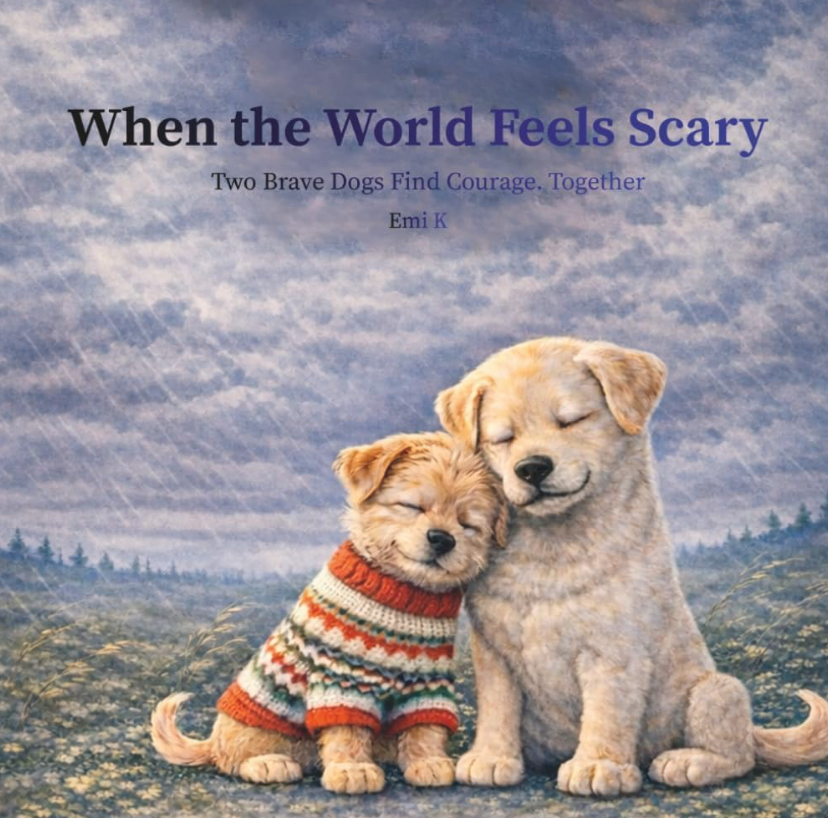
4. The When the World Feels… Series
Change is one of the hardest things for young children to process. New siblings, new schools, house moves, shifting family dynamics — even positive changes can feel destabilising when you're small and the world seems enormous.
These books name the feeling in the title and then explore it with honesty and gentleness. The approach is never dismissive ("it'll be fine") and never catastrophising. It simply says: yes, this is real. Yes, it can be hard. And here is a story that shows you through it.
Best for: Ages 2–6. Any child facing a transition or new beginning.
5. Farmyard Friends from the Kensington Littles Series
Sometimes the most effective emotional teaching happens sideways — through laughter, through play, through identifying with a lovable animal character who accidentally gets things wrong and learns how to make them right.
The Kensington Littles series does this beautifully. These farmyard tales about sharing, kindness, and friendship are gentle and funny, and they model emotional skills — empathy, patience, generosity — through characters children adore. The emotional lessons land without ever feeling like lessons at all.
Best for: Ages 3–7. Perfect for sibling dynamics, sharing struggles, and friendship conflicts.
How to Use These Books
The most effective way to use emotion-focused picture books isn't to read them during a meltdown — it's to read them in calm moments, so that the vocabulary and frameworks are already there when big feelings arise.
Read them at bedtime. Pause and ask: "Have you ever felt like this?" Let your child lead. Don't rush to fix or explain — just be present, and let the story do its work.
If you'd like to explore more books by age and emotional theme, our Reading Guide has curated recommendations for babies, toddlers, and preschoolers. And if you'd like to find any of these books on Amazon, Emi K's full collection is available there too.
Reading together is one of the simplest, most powerful things you can do for your child's emotional world. These five books are a wonderful place to start.