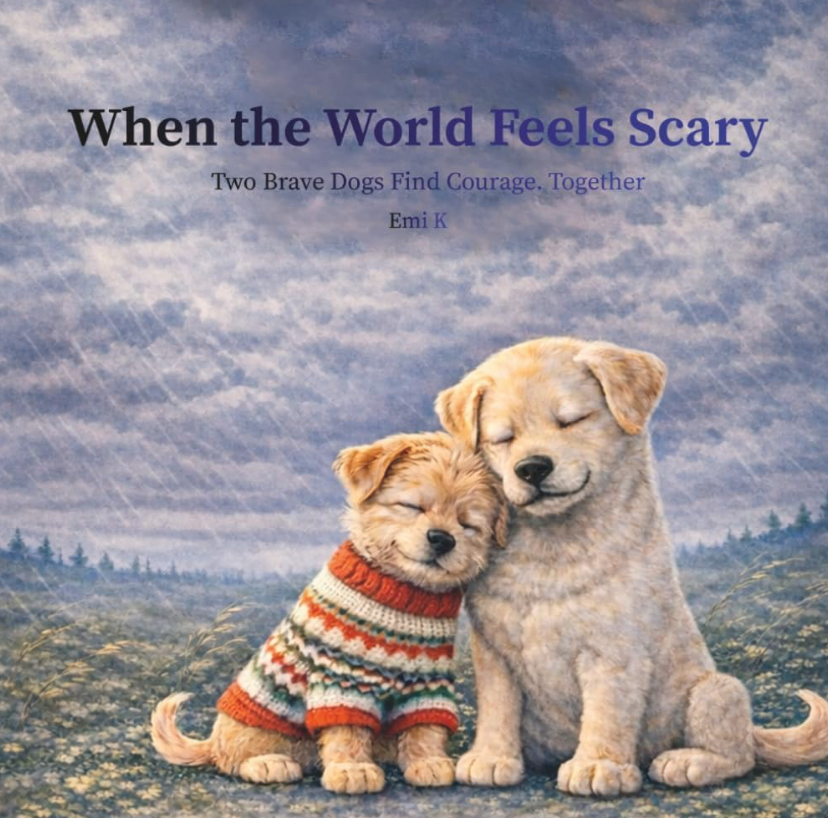
Helping Kids Manage Anger Through Stories: Picture Books for Big Feelings
Anger is not the problem. How a child learns to relate to their anger — whether they can name it, tolerate it, and eventually regulate it — is what determines whether anger becomes a tool or a weapon. As a licensed clinical social worker (LCSW-C), Emi K has worked with many children whose anger was labeled as a behavior problem, when in reality it was an emotion problem: they simply hadn't been given the language or tools to work with it.
Picture books about anger management for kids aren't about teaching children to suppress what they feel. They're about giving anger a shape, a name, and a way through.
Why Anger Is So Hard for Young Children
Young children's brains are still developing the prefrontal cortex — the region responsible for impulse control, emotional regulation, and reasoning. When a 3- or 4-year-old melts down over a broken cracker, they aren't being manipulative. Their brain literally does not yet have the capacity to modulate the intensity of what they're feeling.
What children at this age can do is learn through narrative. Story is one of the oldest and most powerful ways humans process emotion. When a child sees a character experience anger — and watches that character find a way through — they're building a kind of emotional memory. They're rehearsing, in the safe space of fiction, what they might do the next time they feel that surge.
What the Best Anger Management Books Do
The most effective picture books for helping kids manage anger do several things:
They validate the feeling first. Before any skill or strategy is offered, good anger books acknowledge that the child's anger is real and understandable. "It makes sense you felt angry when that happened" is a prerequisite for anything else.
They name it without shame. "You were angry" is different from "You were bad." Books that treat anger as a normal human experience — not a character flaw — help children relate to their emotions without shame.
They show the body as part of the feeling. Anger lives in the body: the clenched fists, the hot face, the tight chest. Books that help children notice their body's signals give them an earlier warning system — so they can respond before the feeling becomes an eruption.
They model strategies. Breathing, moving the body, naming the feeling out loud, asking for help — these strategies work better when children have seen a character practice them first.
Little Hearts, Big Skills: Books Written for Big Feelings
The Little Hearts, Big Skills series was written by Emi K, LCSW-C, specifically to help children develop emotional vocabulary and self-regulation skills. Every book in the series is designed for children from infancy through age 8 — the exact developmental window when emotional patterns are being established.
The series takes a therapeutic approach: emotions are acknowledged and validated before any coping tools are introduced. Children are shown that feelings — including anger — are safe, survivable, and manageable. The goal isn't to eliminate big feelings but to help children develop a relationship with them.
My Feelings Have a Voice
My Feelings Have a Voice is one of the foundational books in the series for helping young children identify and express what they feel. Anger is often loudest when children lack the words to describe what's underneath it — the hurt, the fear, the frustration. This book helps children build exactly that vocabulary.
When children can say "I feel angry because I felt left out," they've done something remarkable: they've translated a body feeling into a communicable message. That translation is the beginning of regulation.
Find My Feelings Have a Voice on Amazon →
How to Use Books in Real Anger Moments
The most powerful use of anger management picture books isn't in the moment of the meltdown — it's before. Read these books during calm, connected moments: at bedtime, at the weekend, over breakfast. The goal is to build the language and framework in advance, so it's accessible when the storm hits.
Before reading: "This book is about a character who has really big feelings. Let's see what happens." No lecture. No setup. Just curiosity.
During reading: Notice and name: "Oh, look at their face. I wonder if that's what anger looks like in your body too?" These gentle observations help children connect the story to their own experience.
After reading: "What did the character do when they felt angry? Do you think that helped?" Keep it conversational. You're not testing them — you're thinking together.
In the moment (later): "Remember what the character in that book did when they felt like this?" A reference to a story a child loves can sometimes cut through the emotional fog when a direct instruction cannot.
When Anger Is More Than a Big Feeling
Books are a complement to professional support, not a replacement. If your child's anger is frequent, intense, and significantly impacting their relationships or daily functioning — at home, at school, or socially — it may be worth consulting a licensed child therapist. Anger can sometimes signal underlying anxiety, grief, trauma, or developmental challenges that benefit from specialized assessment.
For teachers and school counselors supporting children with emotional regulation challenges, the For Teachers and Counselors page has the full Little Hearts, Big Skills series organized by SEL theme — making it easy to find the right book for what a child is working through.
Building an Emotional Vocabulary, One Book at a Time
Every time you read a book about feelings with your child, you're adding a word to their emotional vocabulary. And every word they have for what they feel is a tool they can use instead of a behavior that gets them in trouble.
Helping kids manage anger through stories isn't a quick fix. It's a slow build — book by book, conversation by conversation — toward a child who can one day say: "I'm angry, and I know what to do with that."
Browse the Little Hearts, Big Skills collection, or find the right book by your child's age.
Download the free Feelings Talk Starter Guide — 10 conversation starters to help children name big emotions. Written by Emi K, LCSW-C. Get it free here →
Subscribe to The Reading Nook newsletter for monthly book recommendations focused on emotional intelligence, big feelings, and raising resilient, emotionally fluent children.