Social Emotional Learning Activities for Preschoolers: How Books Build Big Skills
Social emotional learning — SEL — has moved from education theory into mainstream early childhood practice. Teachers, counselors, and childcare providers know that a preschooler who can identify feelings, manage impulses, and cooperate with peers is better positioned for everything from academic success to lifelong mental health. What's less discussed is how simple, accessible, and powerful the best SEL activities for preschoolers actually are — and how central picture books are to all of them.
As Emi K, LCSW-C, who writes therapeutic picture books designed specifically for early childhood SEL, the evidence is clear: a well-chosen read-aloud is one of the most effective SEL interventions available to an early childhood educator. It requires no special training, no equipment, and no separate curriculum block. It requires a book, a child, and ten minutes.
What Is Social Emotional Learning — and Why Preschool?
Social emotional learning is the process through which children acquire and apply the knowledge, attitudes, and skills needed to understand and manage emotions, set and achieve positive goals, feel and show empathy, establish and maintain positive relationships, and make responsible decisions.
Preschool (ages 3–5) is a critical window for SEL development. The brain is highly plastic. Emotional and social patterns established in early childhood — both adaptive and maladaptive — tend to persist. This is when children are building their internal working models of relationships, their emotional vocabulary, and their earliest experience of self-regulation.
SEL at this age doesn't need to be formal instruction. It needs to be embedded in the natural rhythm of the day — in morning circles, in read-aloud time, in how adults respond to emotional moments. Picture books are one of the most natural vehicles for this kind of embedded learning.
Why Picture Books Are Powerful SEL Tools for Preschoolers
Children at preschool age are in what developmental theorists call the preoperational stage: they learn through story, symbol, and play more than through abstract instruction. A lecture about "using your words" lands differently than watching a beloved character struggle to find the right words and then succeed. The story is lived, not just heard.
Picture books specifically offer:
Safe emotional distance. Children can explore scary or uncomfortable feelings through a character without having to own those feelings directly. "The character felt angry" is safer to examine than "I feel angry."
Repetition. Preschoolers want to hear the same book twenty, forty, sixty times. Each repetition deepens the emotional patterns being formed. What feels like stubbornness is actually learning.
Adult co-regulation. A calm, warm adult reading aloud is itself a co-regulatory experience. The child's nervous system synchronizes with the adult's. The story is delivered in a context of safety.
Vocabulary building. Books introduce words for emotions children might feel but can't yet name: jealous, frustrated, overwhelmed, proud. Naming is the first step toward regulation.
The Little Hearts, Big Skills Series for Preschool SEL
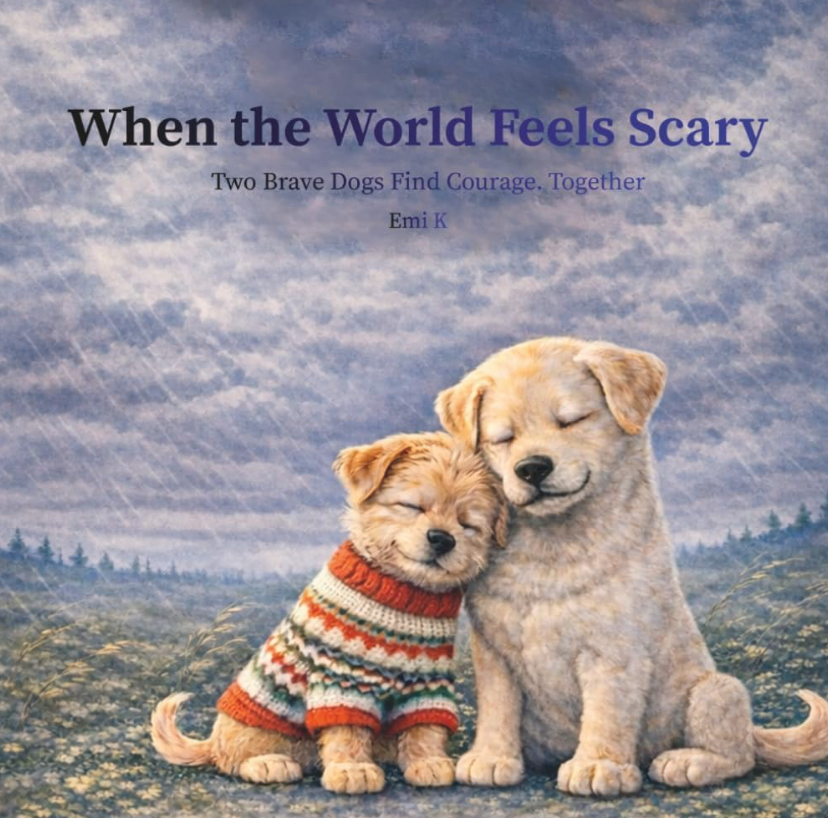
The Little Hearts, Big Skills series, written by Emi K, LCSW-C, was designed from the ground up for early childhood SEL. Each book in the series is grounded in therapeutic principles — emotional validation first, coping skills second — while remaining fully accessible to preschoolers.
The series covers the core SEL domains: understanding feelings, coping with change, making choices, grief and healing, welcoming new family members, and celebrating family and belonging. For educators looking for titles organized by SEL theme and developmental focus, the For Teachers and Counselors page has the full catalog organized by topic area.
5 SEL Activities for Preschoolers Using Picture Books
1. Feelings Face Check-In
Before or after reading a book about emotions, use a simple "feelings face" check-in: ask each child to point to or say the face that shows how they're feeling right now. This builds emotional identification as a daily habit — and the book serves as the anchor that makes the feeling vocabulary real and memorable.
Best books: Any title from the Little Hearts, Big Skills series. My Feelings Have a Voice is particularly effective for this activity.
2. Character Empathy Walk
Pause during reading and ask: "How do you think the character is feeling right now? What in the picture tells us that?" This builds both emotional identification and empathy skills. Children learn to read others' emotional states — a foundational social skill.
Follow up: "Has anyone ever felt that way too?" This bridges fiction to real experience without putting any individual child on the spot.
3. "What Could We Do?" Problem-Solving
At a key conflict moment in the story, close the book and ask: "What could the character do here? What are some choices?" Write or draw the options together. Then open the book and see what the character actually did.
This builds the CASEL competency of responsible decision-making in a low-stakes, playful context. Children experience that there are always multiple responses to a difficult situation.
4. Body-Feelings Mapping
After reading a book about a big feeling like anger, sadness, or fear, ask: "Where do you feel that in your body? Does your tummy feel tight? Does your face feel hot?" Draw a body outline together and mark where different feelings live for different children.
This builds interoceptive awareness — the ability to notice one's own body signals — which is foundational to self-regulation. Download the free Feelings Talk Starter Guide for conversation prompts that pair well with this activity.
5. Story Extension Role-Play
After reading, invite children to act out the story — either as it happened, or with a different ending. "What if the character had done something different? Let's try it." This uses dramatic play (a natural mode of preschool learning) to practice social-emotional skills: negotiating, taking turns, expressing emotion, and resolving conflict.
Building SEL Into Your Classroom Library
The most effective SEL classrooms don't treat social emotional learning as a separate subject. They weave it into every read-aloud, every circle time, every response to an emotional moment in the classroom. Picture books are a central tool for this integration.
Browse the For Teachers and Counselors resource page for the full Little Hearts, Big Skills collection organized by SEL theme. Or explore books by age to find titles specifically calibrated for your preschoolers' developmental stage.
For bulk orders for school libraries, classroom sets, or counseling offices, the For Teachers page also includes a bulk order contact option.
What Preschoolers Who Learn SEL Early Can Do
Research consistently shows that children who develop strong social-emotional skills in early childhood have better academic outcomes, more positive peer relationships, lower rates of behavioral challenges in school, and stronger mental health trajectories. The investment made in a three-year-old's emotional vocabulary pays dividends for decades.
And it starts — often — with a picture book, a warm adult voice, and ten quiet minutes at storytime.
Subscribe to The Reading Nook newsletter for monthly picks of picture books organized by SEL theme — curated specifically for parents, teachers, and counselors working with young children.